
Embeddings
Embedding models support semantic retrieval, similarity and RAG. They have a separate model kind and request surface, rather than being a Chat output mode.
Configure an embedding model
Section titled “Configure an embedding model”- Configure the provider’s OpenAI
embeddingsor Geminimodels.embedendpoint. - Import or create a model with
embeddingoutput modality and check its input token price. - Add the corresponding surface and upstream target, using the actual upstream model name.
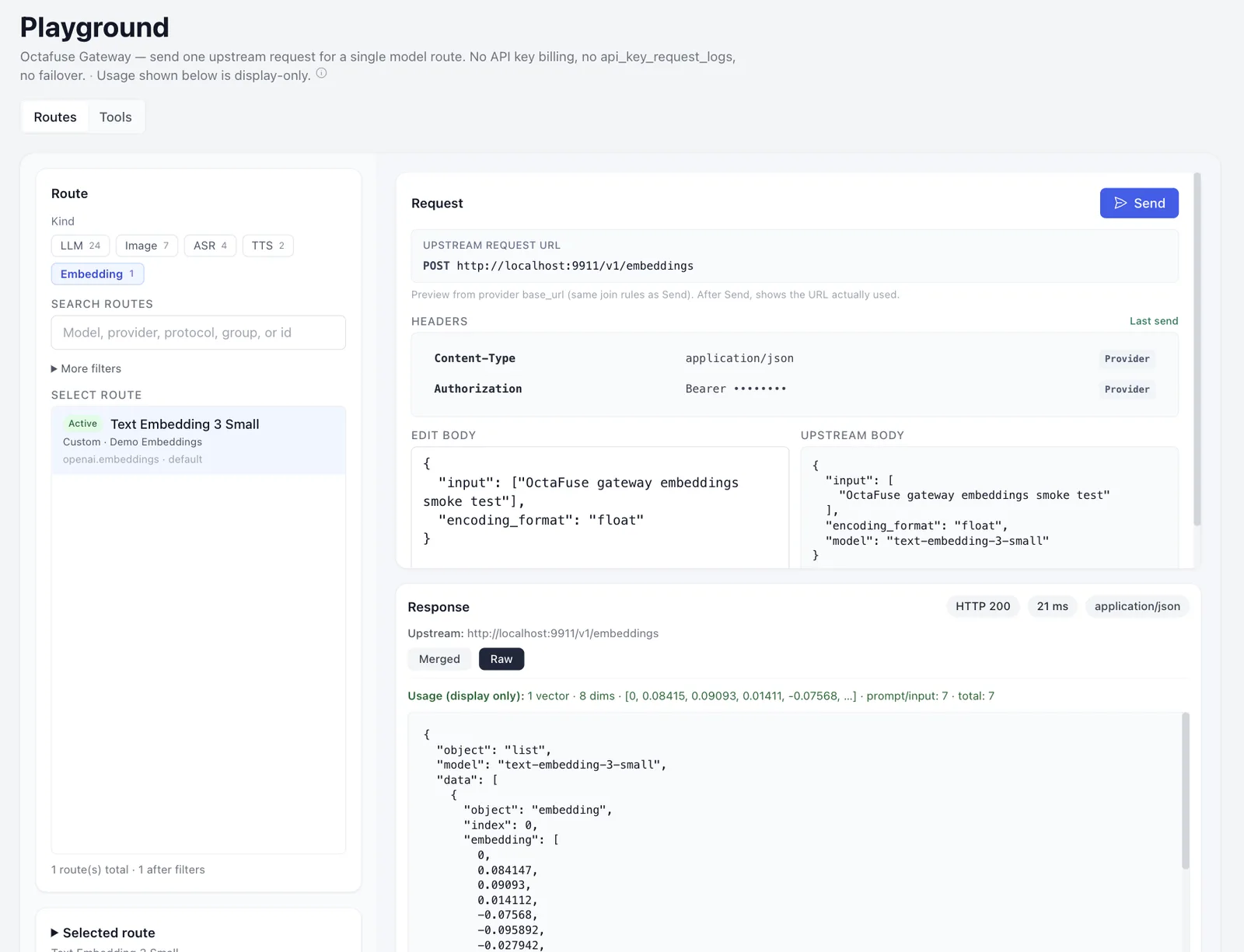
- Test vector count and dimensions in Playground, then use Simulator for real routing and accounting.
OpenAI-compatible request
Section titled “OpenAI-compatible request”curl -sS http://localhost:8787/v1/embeddings \ -H 'Authorization: Bearer sk-your-api-key' \ -H 'Content-Type: application/json' \ -d '{"model":"your-embedding-model","input":["hello","world"]}'The upstream interprets parameters such as dimensions and encoding_format. Embeddings use the same route pools, failover and rate limits. Only reported input tokens are billed; a response without usage is not charged.
Gemini and model discovery
Section titled “Gemini and model discovery”Gemini uses native :embedContent or :batchEmbedContents bodies. Default GET /v1/models excludes embeddings; use ?kind=embedding or ?kind=all to discover them.
See the embedding API reference for exact request and accounting rules.